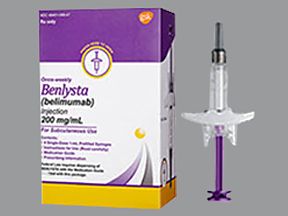
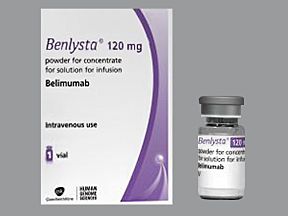
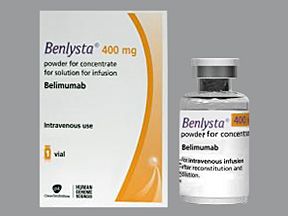
Benlysta is a brand-name prescription drug that’s used to help manage certain types of lupus in adults and some children. Here are key things to know about this medication and how to take it safely and effectively.
Benlysta (“ben-LIST-ah”) is a type of biologic medication called a human monoclonal antibody.
Biologic medications (or “biologics”) are complex drugs made from natural, living sources. They can be composed of proteins, sugars, or nucleic acids (DNA or RNA), or they may be combinations of these substances. Biologics may also be living entities, such as cells and tissues.
Human monoclonal antibodies (mAbs) are lab-made proteins that are clones of a specific type of white blood cell that is part of the immune system. Human mAbs function like a “lock-and-key,” where the antibody (key) fits precisely into a specific antigen (lock) on a disease-causing molecule.
Benlysta is manufactured and distributed by GlaxoSmithKline (GSK).
Benlysta is used to help manage these two types of lupus in adults and certain children ages 5 years and older:
- active systemic lupus erythematosus
- active lupus nephritis
Key terms
- Lupus is an autoimmune condition that occurs when your body attacks its own cells.
- Systemic lupus erythematosus (SLE) causes inflammation throughout your body. It can also affect joints and organs such as your brain, lungs, or kidneys.
- Lupus nephritis is a complication of lupus that specifically affects your kidneys.
Benlysta works by attaching to certain autoantibodies (proteins in your blood that attack your body). The drug reduces the number of autoantibodies you have, which can help manage your lupus symptoms.
Benlysta is typically used along with other drugs to treat SLE or lupus nephritis. Before you start Benlysta treatment, your doctor will help determine the best treatment plan for you, including whether you should take other drugs along with Benlysta injections to manage your condition.
For more about Benlysta’s mechanism of action, see the “How does Benlysta work?”video on this page of the Benlysta website, or talk with your doctor or pharmacist.
Benlysta comes in two forms:
- A powder that’s mixed into a liquid solution. This form is given by IV infusion (an injection into a vein over a period of time).
- A liquid solution inside prefilled syringes or auto-injectors. This form is given as an injection under your skin.
The dosage of Benlysta your doctor prescribes depends on the indication it is used for, the form of the drug, and other considerations.
The most frequently reported side effects of Benlysta in clinical trials of the drug were:
- nausea
- diarrhea
- fever
- infections, such as the common cold or bronchitis
- insomnia
- pain in the arms or legs
- depression
- migraine
- sore throat
- injection site reactions
Benlysta begins to work as soon as you get your first dose of medication. But you may not notice changes in your lupus symptoms until you’ve had a few doses.
If you have questions about what to expect from your Benlysta treatment, talk with your doctor.
Yes, Benlysta is typically a long-term treatment. If you and your doctor determine that Benlysta is safe and effective for you, you’ll likely continue using Benlysta injections long term.
No, Benlysta is not a chemotherapy drug. Benlysta belongs to a group of medications called monoclonal antibodies, which are biologics (drugs made from living cells).
Chemotherapy drugs kill cells in your body that grow quickly. Although this often works to kill cancer cells, chemotherapy drugs also kill healthy cells that grow quickly. Because of this, chemotherapy drugs can cause many side effects.
Benlysta works on a specific part of your immune system, so it causes fewer side effects than a chemotherapy drug.
At this time, Benlysta is not approved by the Food and Drug Administration (FDA) to treat rheumatoid arthritis (RA).
In some cases, doctors may prescribe Benlysta off-label to treat RA. (Off-label is when your doctor prescribes a drug for a different use than it was FDA approved for.)
It’s currently not known whether Benlysta is safe and effective for people with RA. More research is needed into the drug’s use for this condition.
No, Benlysta shouldn’t cause weight gain or weight loss. These weren’t reported side effects during clinical trials of the drug. But weight changes could be due to other factors during your lupus treatment.
For example, some people may take a corticosteroid drug such as prednisone (Rayos) along with Benlysta. Corticosteroids can cause weight gain.
On the other hand, you could experience weight loss if you develop an infection during your Benlysta treatment.
If you have unexplained weight gain or weight loss during your Benlysta treatment, talk with your doctor.
Whether you have health insurance or not, cost may be a factor when you’re considering Benlysta. What you’ll pay for Benlysta may depend on several things, such as your treatment plan and the pharmacy you choose.
Here are a few things to consider regarding Benlysta cost and savings:
- Comparing pharmacies: The price of Benlysta may vary depending on which pharmacy you use, so it can help to compare prices across pharmacies to find the lowest cost.
- Drug coupons: You may be able to find drug coupons on prescription discount websites that can reduce the cost of your medication. These coupons cannot be used with insurance copays or benefits, but the discounted price may be lower than what you would pay through insurance.
- Financial assistance: Some websites provide details about drug assistance programs, ways to make the most of your insurance coverage, and links to savings cards and other services. Two such websites are:
Also, visit the Benlysta website to see if you qualify for savings and support programs directly from the drug’s manufacturer.
Optum Perks is owned by RVO Health. By clicking on this link, we may receive a commission. Learn more.
Here are a few things to consider before you start treatment with Benlysta:
Interactions
Taking a medication with certain vaccines, foods, and other things can affect how the medication works. These effects are called interactions.
Before using Benlysta, be sure to tell your doctor about all medications you take, including prescription and over-the-counter types. Also describe any vitamins, herbs, or supplements you use. Your doctor or pharmacist can tell you about any interactions these items may cause with Benlysta.
Interactions with drugs or supplements
There currently aren’t any medications or supplements known to interact with Benlysta. But this doesn’t mean drug interactions with Benlysta won’t be recognized in the future. For example, new medications may be approved that interact with Benlysta.
For this reason, you should still tell your doctor and pharmacist about any medications you take besides Benlysta. This way, they can check for any new interactions during your treatment.
Other interactions
You should not receive any live vaccines during your Benlysta treatment or in the 30 days before you start treatment.
Live vaccines contain a small amount of the virus that they protect against. Benlysta works by weakening your immune system, so your body may not be able to fight the virus in a live vaccine. This could make you sick.
Examples of live vaccines include:
Benlysta may also make inactive (non-live) vaccines less effective. These vaccines don’t contain a live virus, so they won’t make you sick. But receiving them during your Benlysta treatment could make them less effective.
Examples of inactive vaccines include:
Before starting treatment with Benlysta, talk with your doctor about any vaccines that you may need. In some cases, they may recommend that you get a certain vaccine before starting Benlysta treatment.
Warnings
Benlysta may not be right for you if you have certain medical conditions. These are known as drug-condition interactions. Other factors may also affect whether Benlysta is a good treatment option for you.
Talk with your doctor about your health history before you use Benlysta, especially if any of the following apply to you:
- mood problems, such as depression or suicidal thoughts or behaviors
- vaccines you have recently received or may need
- cancer and cancer treatments
- you are taking other biologic drugs
- you’ve had a previous allergic reaction to Benlysta or any of its ingredients
- active or reoccurring infections
Benlysta and alcohol
There aren’t any known interactions between Benlysta and alcohol. But both alcohol and Benlysta may cause nausea. Combining the two may increase your risk of experiencing nausea.
In addition, you’ll use Benlysta along with other medications to treat your condition. Certain other treatments may interact with alcohol.
If you drink alcohol, talk with your doctor about how much (if any) may be safe to drink with your treatment plan.
Pregnancy and breastfeeding
If you can become pregnant, are breastfeeding, or are using birth control, it’s important to consider whether Benlysta is a safe choice for you.
Do not use more Benlysta than your doctor prescribes. Using more than this can lead to serious side effects.
What to do in case you use too much Benlysta
Call your doctor if you think you’ve injected too much Benlysta. You can also call 800-222-1222 to reach America’s Poison Centers or use its online resource. But if you have severe symptoms, immediately call 911 or your local emergency number. Or go to the nearest emergency room.
Benlysta is a biologic medication prescribed for adults and some children to help manage specific types of lupus. Doses are given via IV infusion or self-administered injections under the skin with prefilled syringes or autoinjector pens.
While generally well-tolerated, potential side effects of Benlysta can range from mild reactions like nausea and headache to more serious concerns such as infections, allergic reactions, and mood changes.
This is a summary article for general educational purposes only. For more details about this drug, read Benlysta’s prescribing information or talk with your doctor or pharmacist.
Disclaimer: While Healthline strives for factual, comprehensive, and current information, this article is not a substitute for a licensed healthcare professional’s expertise. Always consult a doctor before taking or discontinuing any medication. Drug information is subject to change and may not cover all uses, directions, precautions, warnings, interactions, reactions, or adverse effects. The lack of a warning does not guarantee a drug’s safety, effectiveness, or appropriateness for all patients or specific uses. Learn more about our approach to content integrity.