














Key takeaways
- Repatha is used to help reduce the risk of heart attack, stroke, and heart surgery for adults with risk factors for heart disease. It’s also used to lower cholesterol levels in adults and children with specific genetic conditions causing high cholesterol.
- Common side effects of Repatha may include respiratory infections, urinary tract infections, and injection site reactions. Serious side effects could involve high blood pressure and increased blood sugar levels.
- Adults with heart disease may receive Repatha via injection, with dosage varying by condition. Or they may use it alone or combined with other cholesterol-lowering medications like statins.
Repatha (evolocumab) is a prescription drug that’s used in certain situations to decrease serious heart-related risks and lower cholesterol. Repatha comes as a liquid solution for injection under your skin.
Doctors prescribe Repatha to:
- decrease the risk of heart attack or stroke and decrease the need for heart surgery in some adults
- decrease LDL cholesterol in adults and some children with high cholesterol
For some uses, doctors may prescribe Repatha together with a low fat diet and other medications.
Repatha basics
Repatha is a biologic medication. Biologics are made from parts of living organisms.
The active ingredient in Repatha is evolocumab. (An active ingredient is what makes a medication work.)
Repatha isn’t available in a biosimilar form. (Biosimilars are like generic drugs. But unlike generics, which are made for non-biologic drugs, biosimilars are made for biologic drugs.)
Like most drugs, Repatha may cause mild or serious side effects. The following lists describe some of the side effects that Repatha may cause.
For a full list of all side effects reported with Repatha, see the drug’s prescribing information.
| Mild side effects | Serious side effects |
|---|---|
| • upper respiratory infection, such as influenza (the flu) or the common cold • urinary tract infection (UTI) • bruising, discoloration, and pain at the injection site • back pain • joint pain • muscle spasm • mild allergic reaction | • high blood pressure • increased blood sugar levels, which may lead to diabetes • serious allergic reaction |
The side effects of Repatha may vary depending on the condition you’re using it to treat. For a more in-depth guide, see this article on Repatha’s side effects and how to manage them. You can also talk with your doctor or pharmacist.
Repatha images
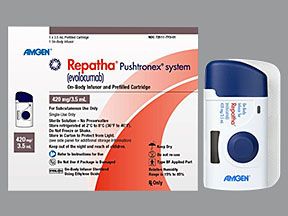
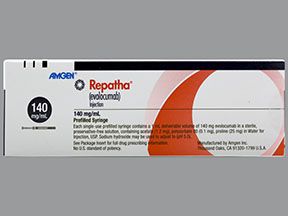
Whether you have health insurance or not, cost may be a factor when you’re considering Repatha. What you’ll pay for Repatha may depend on several things, such as your treatment plan and the pharmacy you use.
Here are things to consider regarding cost:
- Comparing pharmacies: The price of Repatha may vary depending on which pharmacy you use, so it can help to compare prices across pharmacies to find the lowest cost.
- Drug coupons: You may be able to find drug coupons on prescription discount websites that can reduce the cost of your medication. These coupons cannot be used with insurance copays or benefits, but the discounted price may be lower than what you would pay through insurance.
- Financial assistance: Some websites provide details about drug assistance programs, ways to make the most of your insurance coverage, and links to savings cards and other services. Two such websites are:
Repatha is a type of cholesterol-lowering medication called a PCSK9 inhibitor. It works by targeting a specific protein in your liver that typically stops your body from getting rid of “bad” LDL cholesterol.
By attaching to the PCSK9 and blocking it, Repatha allows your liver to clear cholesterol from your blood more effectively. This process lowers your overall LDL levels, which can help reduce your risk of serious heart issues like heart attacks or strokes.
Repatha comes in prefilled, single-dose auto-injectors called Repatha SureClick. It’s given as an injection under your skin.
The typical recommended dosage of Repatha is:
- 140 milligram (mg) every 2 weeks, or
- 420 mg every month
This dosage is the same for adults and children.
It’s important to note that the dosage your doctor prescribes will depend on several factors, including your specific condition and how your body responds to Repatha. If you have questions about your dosage, talk with your doctor.
More details
To learn more about Repatha’s dosing and administration, take a look at these articles:
Yes, depending on your condition, other treatment options may be available. Talk with your doctor for details about other treatments for your heart health and cholesterol levels, including:
- inclisiran (Leqvio)
- alirocumab (Praluent)
- atorvastatin (Lipitor)
- pravastatin
- rosuvastatin (Crestor)
- ezetimibe (Zetia)
- fenofibrate (Antara, Lipofen)
- niacin (Niacor)
The best treatment for you will depend on your personal health factors. Your doctor can help you weigh the pros and cons of Repatha or another medication. The list below includes things to keep in mind.
Why Repatha may be right for you
- Repatha can be self-administered at home. Some other injection medications can only be given by a healthcare professional in their office.
- Repatha is approved for use in adults and some children, while some medications may only be approved for adults.
- Some medications need to be taken daily. Repatha is injected once a month or every other week, so there are fewer doses to keep track of.
Why Repatha may not be right for you
- Repatha is only available as an injection. Some people may prefer capsules or tablets instead.
- Some forms of Repatha contain latex. If you have a latex allergy, be sure to let your doctor know.
- Repatha is not available as a biosimilar or generic, so some medications may cost less.
Before you start Repatha, talk with your doctor about your treatment plan. Some health factors can affect how your body responds to Repatha, either making the drug less effective or increasing the risk of serious side effects.
Be sure to discuss:
- your overall health
- any other medical conditions you have
- any other medications you take
- whether you’re pregnant, breastfeeding, or planning for either
Your doctor will let you know whether Repatha is a safe and effective treatment option for you.
If you have heart disease or high cholesterol, your doctor may recommend Repatha.
If you have questions about taking Repatha or you wonder whether it’s an option for you, talk with your doctor or pharmacist. Here are some questions you may wish to ask:
- What side effects might I have with Repatha based on my condition? And how can I treat them?
- How long should I expect side effects from Repatha to last?
- What should I do if I’m having difficulty injecting doses of Repatha?
- What should I do if I become pregnant while I’m receiving Repatha?
Read more about treatment options for high cholesterol. Also, learn about injectable alternatives to statins and more statin alternatives.
To learn more about Repatha, see these articles:
To get information on different conditions and tips for improving your health, subscribe to any of Healthline’s newsletters. You may also want to check out the online communities at Bezzy. It’s a place where people with certain conditions can find support and connect with others.
Q:
If I’m taking Repatha with another cholesterol-lowering drug, such as a statin, do I have an increased risk of side effects?
AnonymousA:
It’s possible. Taking Repatha with a statin may increase the risk of certain side effects that can be caused by either drug. For example, both Repatha and statins may cause muscle pain.
But most people who took Repatha in studies also took statins or other cholesterol medications. And many of these people took the combination without severe side effects.
If you’re concerned about your risk of side effects with Repatha, talk with your doctor. Also, be sure to tell them about all of your current medications before starting Repatha.
The Healthline Pharmacist TeamAnswers represent the opinions of our medical experts. All content is strictly informational and should not be considered medical advice.Repatha is a prescription injection that’s prescribed to reduce the risk of heart attacks and strokes in adults with higher risks of heart problems. Doctors also prescribe it for adults and children over 10 who have specific genetic conditions that cause naturally high cholesterol.
Repatha can cause mild side effects like cold symptoms or soreness at the injection site, but serious reactions are rare. If you’re managing heart risks or high cholesterol, Repatha could be a helpful option to discuss with your doctor.
Disclaimer: While Healthline strives for factual, comprehensive, and current information, this article is not a substitute for a licensed healthcare professional’s expertise. Always consult a doctor before taking or discontinuing any medication. Drug information is subject to change and may not cover all uses, directions, precautions, warnings, interactions, reactions, or adverse effects. The lack of a warning does not guarantee a drug’s safety, effectiveness, or appropriateness for all patients or specific uses. Learn more about our approach to content integrity.