














The dosage for Symbicort may vary based on age and diagnosis, but it’s typically two inhalations twice daily. For children ages 6 to 11, the maximum strength is 80/4.5 mcg. For ages 12 and older, a doctor may recommend up to 160/4.5 mcg, depending on symptom severity.
Symbicort is a prescription drug used to treat chronic obstructive pulmonary disease (COPD) in adults and asthma in adults and children.
Symbicort is available in a metered-dose aerosol inhaler (to breathe it in), containing a combination of two active ingredients: budesonide (80 or 160 mcg) and formoterol (4.5 mcg).
This article provides dosage information for Symbicort, including instructions on its use, sourced from the drug manufacturer and the prescribing information label. When using Symbicort, it’s essential to follow the dosage recommendations provided by your prescribing healthcare professional.
Symbicort images
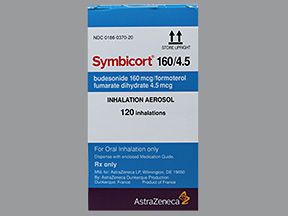
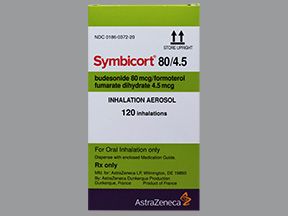
This section describes the typical dosage of Symbicort. The table below provides common Symbicort dosages, giving you a general idea of how this medication is typically used.
The starting dosage may be different for some people, and a healthcare professional will determine it based on the severity of the symptoms.
The most important thing when using Symbicort is to follow the instructions recommended by a healthcare professional for your specific use. They know what you need, and they may adjust things along the way. Every person’s treatment is unique.
| Condition | Age | Strength | Dosage |
| COPD | Adults | 160 micrograms (mcg) budesonide/4.5 mcg formoterol | Two inhalations (puffs) twice per day |
| Asthma | Adults and children (ages 12 years and older) | 80 mcg/4.5 mcg or 160 mcg/4.5 mcg, depending on symptom severity | Two puffs twice per day |
| Asthma | Children (ages 6 to 11 years old) | 80 mcg/4.5 mcg | two puffs twice per day |
What forms are available for Symbicort?
Symbicort comes as a metered-dose inhaler containing medication that you breathe in.
What strengths does Symbicort come in?
Symbicort comes in two strengths: 160 mcg budesonide/4.5 mcg formoterol and 80 mcg budesonide/4.5 mcg formoterol. Children under the age of 12 years should not exceed doses of 80 mcg/4.5 mcg.
Optum Now is operated by RVO Health. By clicking on this link, we may receive a commission. Learn more.
Symbicort is approved for the treatment of COPD and asthma in adults and children.
The information below describes dosages that are commonly used or recommended for these conditions, but a prescribing doctor may recommend a different dose.They’ll determine the best dosage based on current symptoms and overall medical history.
Dosage for asthma
For asthma, the recommended Symbicort dosage is two puffs twice per day. A doctor will prescribe the strength that’s best, depending on the severity of the asthma symptoms.
Dosage for COPD
The recommended Symbicort dosage for COPD is two puffs twice per day. For COPD, a doctor will typically prescribe a strength of 160 mcg/4.5 mcg.
Dosage adjustments
When used to treat asthma, a doctor may increase the dose of Symbicort from 80 mcg/4.5 mcg to 160 mcg/4.5 mcg if symptoms do not respond to the lower dose.
Symbicort is approved for the treatment of asthma in children.
Children taking Symbicort may take two puffs of the medication twice per day. The strength will depend on age, and a healthcare professional may also decide to adjust or lower the dosage based on the severity of the symptoms.
- For children ages 6 to 11 years, the recommended strength is 80 mcg/4.5 mcg.
- For children ages 12 years and older, a doctor will prescribe the strength that best responds to their needs, depending on the severity of the symptoms.
Symbicort comes as a metered-dose inhaler. You’ll take two inhalations (puffs) twice per day. You’ll take a dose of Symbicort once in the morning and once in the evening (about 12 hours apart).
Before using the Symbicort inhaler for the first time, you’ll need to prime it:
- Shake your inhaler for 5 seconds.
- Spray it once away from your face.
- Shake your inhaler for another 5 seconds
- Spray it away from your face once more.
To start using the Symbicort inhaler:
- Shake it for 5 seconds and remove the mouthpiece.
- Breathe out fully (exhale until your lungs are empty).
- Put the white piece fully in your mouth and close your lips around it.
- Breathe in (inhale) as you press down firmly on the counter on top of the inhaler to release the medication.
- Continue to breathe in, and hold your breath for 10 seconds.
- Remove the inhaler from your mouth and keep it upright.
You’ll repeat the steps above for your second puff.
After taking your dose, replace the cover on the inhaler. Rinse your mouth with water and spit it out (do not swallow the water).
For more detailed instructions on how to use your Symbicort inhaler, please visit the manufacturer’s website.
If you use your inhaler as prescribed, it should work for 30 days. You can use the counter on the inhaler to keep track of your daily doses.
Accessible drug containers and labels
If you find it difficult to read the prescription label on your medication, you can consult with a doctor or pharmacist. They may be able to provide or refer you to medication labels that:
- have large print or use braille
- feature a code you can scan with a smartphone to change the text to audio
Is Symbicort used long term?
Yes, Symbicort is usually used as a long-term treatment for COPD and asthma. Most people discuss the benefits and risks of long-term Symbicort use with a doctor to determine if it’s the best option.
If you miss a dose of Symbicort, just skip it and take the medication at the next scheduled time. It’s important not to exceed four inhalations (puffs) per day.
If you need help remembering to take your Symbicort dose on time, try using a medication reminder. This can include setting an alarm or downloading a reminder app on your phone.
Taking more Symbicort than a doctor prescribes can lead to serious side effects. Recognizing the symptoms of an overdose is important to know when to seek immediate care.
Symptoms of overdose
Symptoms caused by an overdose can include:
- heart palpitations (feeling like your heart skipped a beat or added extra beats)
- chest pain
- high blood pressure or low blood pressure
- seizures
- insomnia (trouble sleeping)
- headache
- nausea
- dizziness
- muscle cramps
- feeling nervous
There are other possible symptoms of an overdose. If you experience severe symptoms after taking Symbicort, seek immediate medical attention.
What to do in case you use too much Symbicort
Call a doctor right away if you think you’ve used too much Symbicort.
You can also call 800-222-1222 to reach the American Association of Poison Control Centers or use its online resource.
If you have severe symptoms of overdose after taking Symbicort, call 911 (or your local emergency number) immediately or go to the nearest emergency room. Do not wait to see if symptoms improve.
——-
Disclaimer: Healthline has made every effort to make certain that all information is factually correct, comprehensive, and up to date. However, this article should not be used as a substitute for the knowledge and expertise of a licensed healthcare professional. You should always consult your doctor or another healthcare professional before taking any medication. The drug information contained herein is subject to change and is not intended to cover all possible uses, directions, precautions, warnings, drug interactions, allergic reactions, or adverse effects. The absence of warnings or other information for a given drug does not indicate that the drug or drug combination is safe, effective, or appropriate for all patients or all specific uses.