














Flexibility is the ability of your joints to move through their full range of motion without pain or stiffness. It also refers to the pliability of the muscles that support the joints. Flexible muscles and tendons allow for a greater range of motion during activities.
Do you want to jump higher, run faster, and move without pain? If you’re active and exercising regularly, the reason you may not be reaching your goals isn’t for lack of activity, but rather lack of mobility.
There are many exercises that can improve your flexibility, including stretches. When exercising to improve flexibility, people might use static or dynamic stretches.
Try these five flexibility exercises to improve your joint range of motion and function so you can move better, allowing you to improve strength and performance during your next workout.
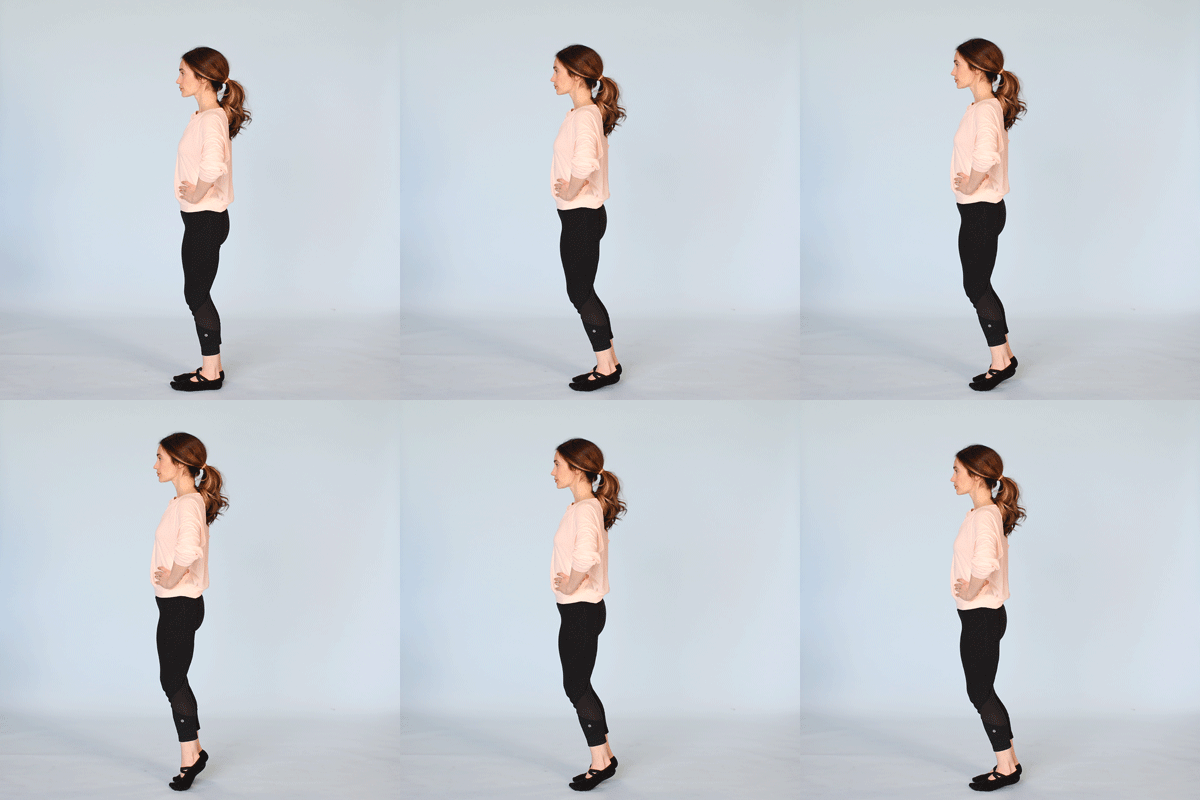
Good ankle mobility may contribute to better balance, fewer falls, and better performance during activities like squats and deadlifts.
You won’t need any equipment to perform this stretch, but some people may prefer to stand beside a wall or chair for help balancing.
- Stand tall next to a wall with your hands on your hips. If necessary, place one hand on the wall for balance.
- Slowly rock forward onto your toes, coming into a tip-toe position.
- Hold for a couple of seconds and then release, bringing your feet flat on the ground again.
- Repeat 10 times.
To extend this ankle stretch, you can try slowly rocking back onto your heels, lifting your toes off the ground, after step 3. After holding this position for a few seconds, slowly bring your feet flat to the ground again.
Your hip joint is a ball and socket that moves in all directions. It’s important to warm up the hip and surrounding muscles before any workout, since they’re key contributors to balance and stability.
You won’t need any equipment to carry out this exercise. It will target various muscles around your hips, including the hip flexors and glutes.
- Stand tall with feet hip-width apart.
- Keeping both legs straight, lift your right leg.
- Move your right leg in a circle, pushing it behind you and sweeping it around, anti-clockwise, until it’s back in its original position.
- Repeat until you’ve done 10 circles.
- Place your right foot on the floor and repeat on the left side.
- Repeat the entire sequence, circling your legs in the opposite direction — clockwise.
If you’re finding it hard to keep your balance, try holding a wall or a chair on the side of the body that isn’t doing the leg circle.
GIF credit: Active Body. Creative Mind.
Good mobility in the spine helps you move your arms freely over your head and twist side to side. Lower levels of mobility may contribute to shoulder pain and problems, slouching, and upper back pain.
You don’t need any equipment to stretch your spine. However, since this exercise involves lying down, you may find it more comfortable to do it on an exercise mat.
This exercise will target your abdominal muscles, obliques, and spine stabilizing muscles, among others.
- Lie flat on your back with your arms extended straight on the floor in line with your shoulders.
- Bend your knees and hips, bringing them up to a 90-degree angle, called a tabletop position.
- Keeping your knees together, twist your lower body to the left until your left knee rests against the floor.
- Turn your head to face toward your right arm.
- If you want to increase the stretch, bring your left arm across your body, reaching toward your right arm.
- Hold this position for 3 seconds and slowly relax, bringing your body back to lie in a neutral position.
- Repeat 5 times on each side.
GIF credit: Active Body. Creative Mind.
Some research suggests improper posture, which may link with electronic device usage or office-based work, can contribute to musculoskeletal disorders. However, regular exercise can help reduce this risk.
This exercise may help improve mobility and flexibility in your shoulders. Warming up the shoulders before a workout may also help improve your form and prevent injury.
For this exercise, you’ll need a broomstick or PVC pipe.
- Stand with your feet shoulder-width apart, holding a broomstick parallel to the floor. Use an overhand grip with your hands positioned as wide as possible.
- Keeping your arms straight, slowly raise the broomstick above your head. Hold your core tight to maintain good posture and balance.
- Bring the broomstick behind your head as far as you’re able. Hold for 2 seconds and return to the starting position.
- Repeat 5 times.
Neck pain is one of the most common types of musculoskeletal pain. Reduced mobility in the neck can lead to pain and also affect your ability to perform your daily tasks.
You don’t need any equipment for this exercise.
- Sit or stand comfortably with your hands on your lap or at your sides.
- Tilt your head to one side until you feel a stretch. Slowly roll your head forward to bring your chin to your chest, only going as far as you can without pain.
- Continue to roll your head to the other side until you feel a stretch along the opposite side of your neck.
- Make three half circles, moving slowly and smoothly through the motion.
Static stretching involves holding one position for an extended period. Dynamic stretching is stretching while moving through a movement.
According to a 2024 review, stretching frequently over two weeks or more can help improve a person’s joint range of motion, particularly when using static stretching.
However, both static and dynamic stretches have their uses and benefits. For example, another 2024 review concludes that dynamic stretching as part of a warm-up may improve performance and range of motion in the lower limbs.
Precautions to take when stretching
Always consult your doctor before starting a new exercise program. Dynamic warm-up and range of motion exercises may not be suitable for everyone, especially those with previous injuries or joint replacements.
If a stretch or exercise starts to hurt, stop immediately.
If you’re unsure that you’re doing these exercises correctly, you can seek help from a qualified professional, such as a physical therapist.
Joint mobility can have many benefits on function for people at all stages of life. It’s an important part of a workout for athletes or gym-goers and can also be beneficial for older adults with arthritis or joint pain.
The movements in this article may help you improve mobility in your ankles, hips, shoulders, neck, and spine. Try these movements to feel warm and limber before jumping into your next workout.
30 Days of Winter Wellness
Day 8
Here are some quick tips to incorporate these exercises into your day this winter:
- Set an alarm and do the exercises at the same time every day to see your flexibility improve.
- Wear lightweight, breathable workout clothing.
- Prepare your space and equipment before your workout, so you have everything you need ready.
Catch up on Day 7 of the challenge to learn some winter skin care tips.
Natasha Freutel is a licensed occupational therapist and wellness coach and has been working with clients of all ages and fitness levels for the past 10 years. She has a background in kinesiology and rehabilitation. Through coaching and education, her clients are able to live a healthier lifestyle and decrease their risk of disease, injury, and disability later in life. She’s an avid blogger and freelance writer and enjoys spending time at the beach, working out, taking her dog on hikes, and playing with her family.