














February is heart health month. In this article, we are spotlighting a classic heart-healthy food: salmon.
According to the
Your body cannot make these compounds on its own, so it is essential to obtain them through your diet. Salmon is a good source.
As we focus on ways to support heart health this month, consider adding one or more of the following salmon recipes into your weekly rotation. The following recipes also contain other heart-healthy ingredients in addition to salmon.
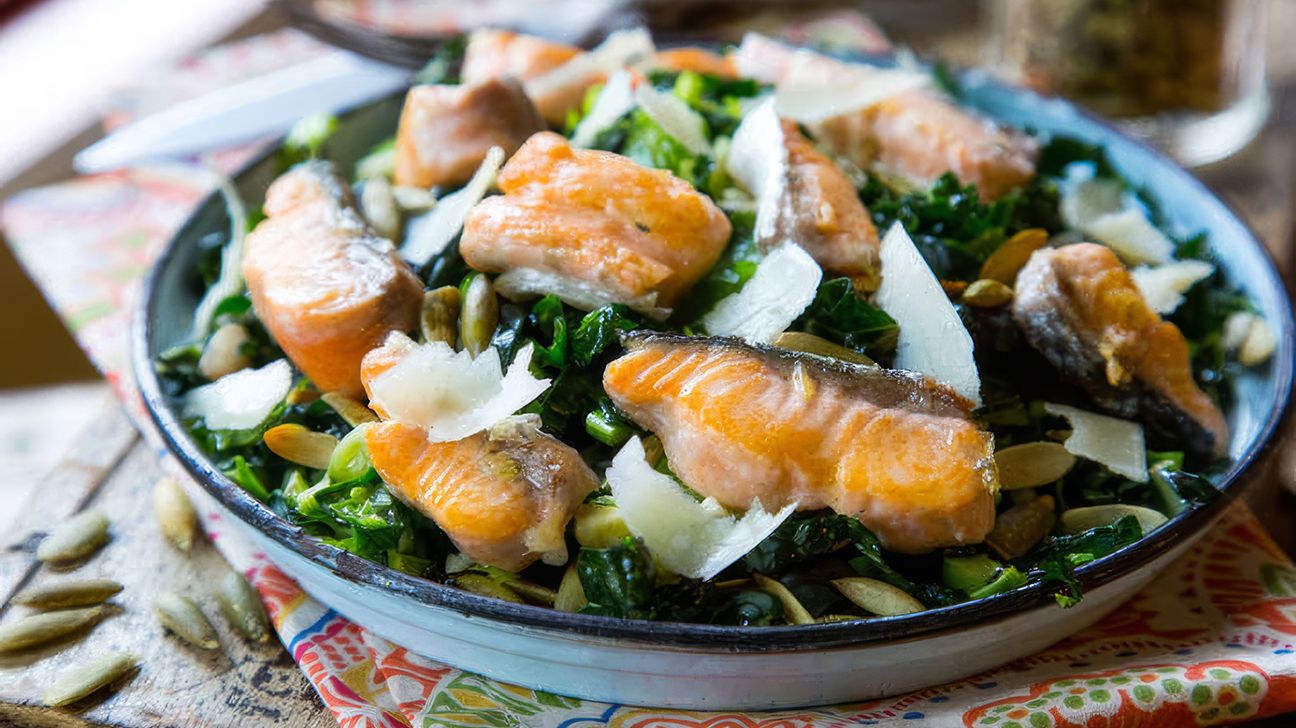
This nutrient-dense, greens-focused recipe is low in carbs and high in protein, keeping you feeling full long after you eat. As the name suggests, the Brussels sprouts and kale are topped with a dressing consisting of garlic, mustard, honey, lemon juice and zest, and olive oil. Freshly grated Parmesan is added on top.
Cruciferous vegetables, such as Brussels sprouts and kale, may help lower blood pressure in adults with mildly elevated blood pressure.
To make this meal even more heart-friendly, consider removing the salt called for in the dressing. You may also consider looking for low sodium versions of the Dijon mustard and Parmesan.
The salmon in this recipe is topped with a mixture of apple, parsley, walnuts, tomato pesto, and honey. This dish is relatively easy to prepare, as the salmon and broccolini are roasted on the same sheet pan. This makes it an ideal weeknight dinner with minimal cleanup.
Walnuts are observed to have several beneficial effects on the heart, including:
- lowering triglycerides and cholesterol
- decreasing blood pressure
- reducing the risk of atherosclerosis
- anti-inflammatory, antioxidant, and antiarrhythmic effects
This dish contains 44 grams (g) of protein and 9 g of fiber, which can help you feel satiated.
Like the above recipe, this dish requires minimal cleanup because everything can be made on a single sheet pan. Broccoli, carrots, and onions are tossed with 2 tbsp of olive oil and a pinch of salt and pepper. The salmon is also seasoned with salt and pepper, and red pepper flakes are spread over everything before baking in the oven.
The quinoa is cooked separately. You can do this in a rice cooker or pot, or you can purchase microwavable bags for even easier prep. Be sure to check these ready-to-eat bags for additives, such as excess sodium or added sugars.
Quinoa may help regulate blood sugar, decrease blood lipid, and increase anti-oxidation and anti-inflammatory action, which can be beneficial for individuals with cardiovascular disease.
If you’re looking for a kick of spice in your dinner, this recipe is for you. The salmon is coated with soy sauce, honey, lime juice, and garlic, then baked and topped with mayonnaise, sriracha, and sesame oil. It is served alongside cucumber, onion, and avocado.
Note that this recipe, as it is, is high in sodium, with 862 milligrams (mg) per serving. A way to reduce this amount is to opt for low sodium varieties of the soy sauce and the sriracha, or to use less than called for in the recipe.
Consuming avocados may help reduce your risk of developing heart disease.
There are many delicious ways to eat salmon, which is a food that may help support heart health. The recipes above also contain other ingredients that can support heart health, such as walnuts, cruciferous vegetables, and avocados.
Consider making one of these recipes for your next dinner.
Heart health reset
The Heart Health Reset is a 7-day guide to caring for your heart through small, realistic habits you can build into everyday life. Each day will focus on a different area of heart health, including movement, diet, and emotional well-being, along with guidance from medical experts and practical tips you can integrate into your daily routine.
There’s no pressure to do everything at once. This reset is about learning what supports your heart and building long-term habits.
Continue your heart health journey. Catch up on Day 3 for a guide to creating your own heart health blueprint.