Key takeaways
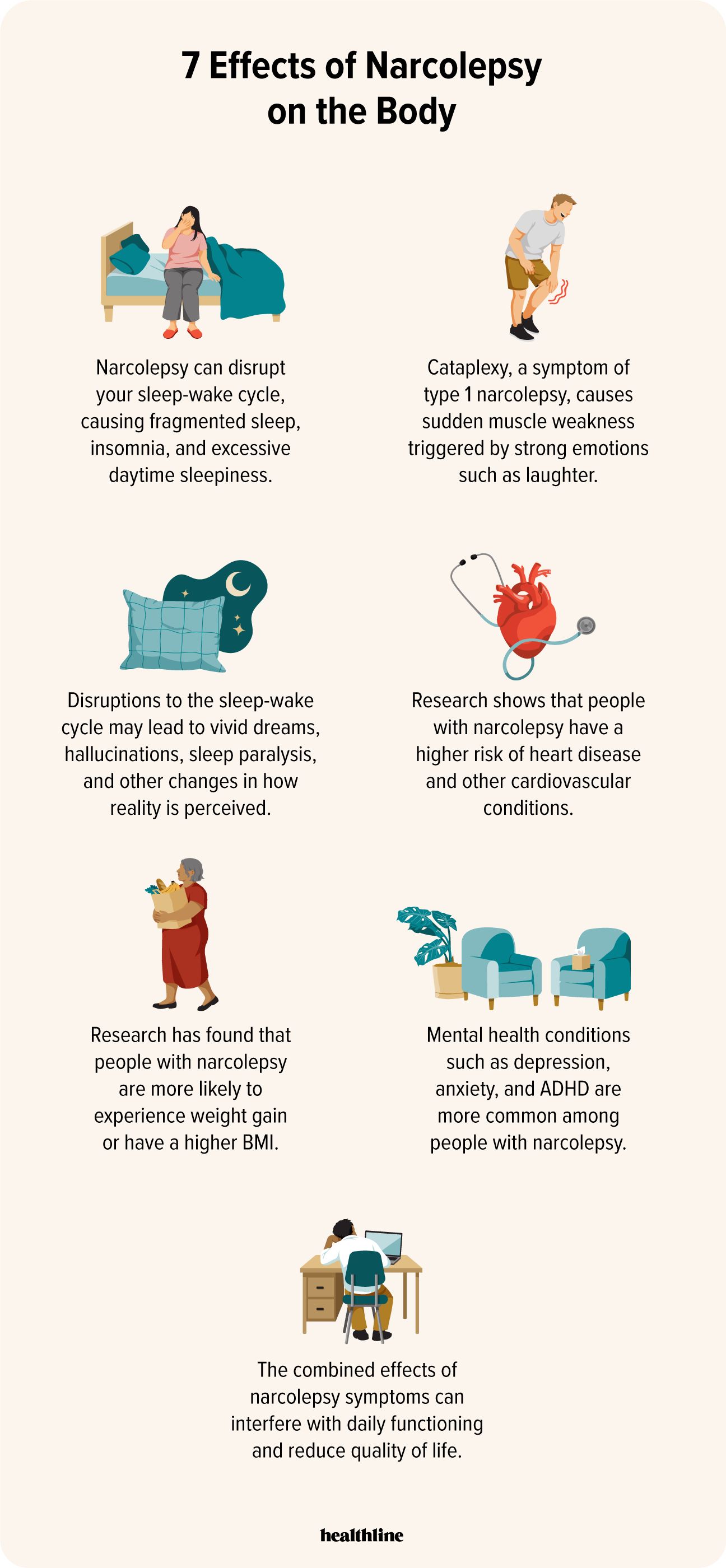
- Narcolepsy can cause disturbances in the sleep-wake cycle, leading to issues like fragmented sleep, insomnia, and excessive daytime sleepiness.
- Type 1 narcolepsy can cause cataplexy, which is characterized by sudden muscle weakness triggered by strong emotions.
- People with narcolepsy may experience mental health conditions, such as depression, anxiety, and ADHD, and are at a higher risk of heart disease and weight gain, which can impact their daily life and overall well-being.
Narcolepsy is a neurological sleep disorder that disrupts the sleep-wake cycle. These disruptions can lead to symptoms, such as excessive daytime sleepiness, insomnia, REM sleep behavior disorder, and more.
However, the effects of narcolepsy can extend beyond sleep. The condition can affect multiple body systems, as well as mental and emotional health and daily functioning.
Below are seven ways that narcolepsy can affect the body.