














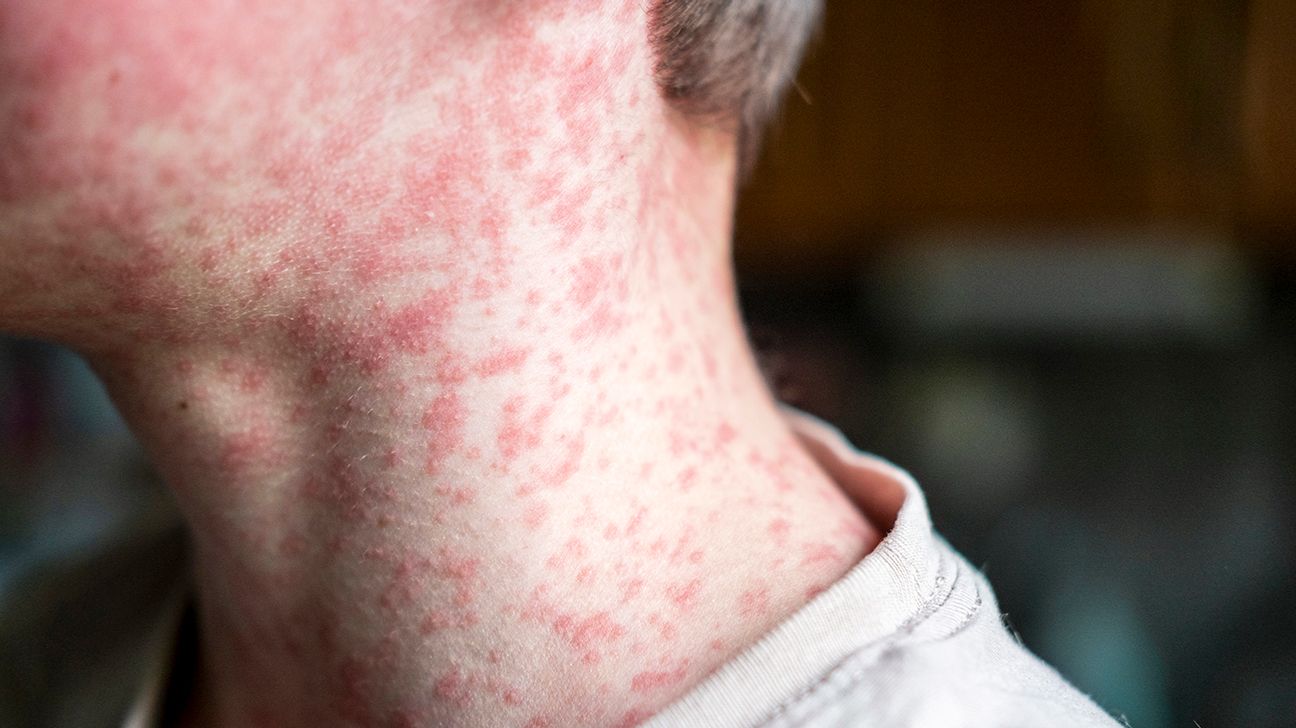
A splotchy reddish rash is the hallmark symptom of a measles infection. Other symptoms include fever, cough, runny nose, and sore throat.
Measles is a highly contagious viral infection that spreads through the air through coughs or sneezes. The virus can remain airborne and capable of infecting someone for
The illness first affects the respiratory system, and can lead to serious complications such as pneumonia and encephalitis (inflammation of the brain).
According to the World Health Organization, an estimated
This article reviews the signs, symptoms, and treatment of measles.
Symptoms of measles usually begin 7 to 14 days after exposure to the virus. Here is a symptom timeline:
| Initial symptoms | 2 to 3 days after the start of symptoms | 3 to 5 days after the start of symptoms |
| high fever | Tiny white spots (called “Koplik spots”) may appear inside the mouth. | The measles rash first appears. |
| cough | A measles rash usually begins as flat red spots on the face at the hairline. On darker skin, the spots may be deep purplish in color and difficult to see. | |
| sore throat | The spots then join together into a splotchy red or purplish rash that travels from the face down to the neck, trunk, arms, legs, and feet. | |
| runny nose | Eventually, the rash will cover the entire body. The rash lasts for 5 or 6 days in total. Immunocompromised people might not have the rash. | |
| red, watery eyes | When the rash appears, a person’s fever may spike over 104°F (40°C). |
Symptoms of the measles often disappear in the same order in which they first emerged.
After a few days, the rash should start to fade. It may leave behind a brownish color on the skin, as well as some peeling. The fever and other measles symptoms will also begin to recede, and you or your child should begin to feel better.
However, about 30% of people who get the measles develop complications
Seek medical care if you believe you or your child has the measles
Call a doctor or pediatrician immediately if you think you or your child has been exposed to measles. Prompt care may prevent complications.
More severe complications of the measles in adults and children include:
- Encephalitis. Approximately 1 out of every 1,000 children with measles will develop encephalitis (swelling of the brain). This can lead to convulsions and may lead to deafness or intellectual disability. Initial symptoms include:
- fever
- headache
- vomiting
- stiff neck
- lethargy (fatigue)
- Pneumonia. About 1 out of every 20 children with measles gets pneumonia. It is the most common cause of death from measles in young children. People whose immune system has been weakened by another disease can get an even more dangerous form of pneumonia. Symptoms include:
- coughing that may produce phlegm (mucus)
- fever
- sweating or chills
- shortness of breath that happens while doing normal activities, or even while resting
- chest pain that’s worse when you breathe or cough
- feelings of tiredness or fatigue
- loss of appetite
- nausea or vomiting
- headaches
- Hospitalization. In the United States, an estimated 1 in 5 unvaccinated people who get measles is hospitalized.
- Death. Nearly 1 to 3 of every 1,000 children who contract measles will die from respiratory and neurologic complications.
- Complications during pregnancy. If you are pregnant and have not had a measles (MMR) vaccine, measles may cause premature birth or a low-birth-weight baby.
Measles is preventable
Talk to a doctor or pediatrician about the
Here are several images of measles.
Antibiotics do not work for viral infections like the measles. Sometimes, getting the measles, mumps, and rubella (MMR) vaccine within the first 3 days after being exposed to the virus can prevent the disease or lessen its severity.
A doctor may also prescribe a dose of immune proteins called immunoglobulin, within 6 days of exposure.
Short of that, the goal of treatment is to relieve symptoms and minimize the chance of complications.
The best advice for people who are already sick is to rest and allow the body time to recover. Stay comfortable by drinking plenty of fluids and taking acetaminophen (Tylenol) for fever.
Warning
Don’t give aspirin to children, because of the risk for a rare but serious condition called Reye’s syndrome.
Measles is a highly contagious viral infection. It can lead to dangerous complications and death among children and adults who have not received the vaccine.
Getting a vaccination not only protects you and the people close to you, but it also prevents the measles virus from spreading and affecting people in your community who are at risk for more serious complications due to underlying medical conditions.
Getting vaccinated also protects young children who cannot be fully immunized against measles until they are 4 to 5 years old and, most importantly, babies under one year who have little or no immunity against measles infection
Most people recover from measles within 3 weeks. Early diagnosis can help prevent complications. If you or your child has been exposed to the measles virus, contact a doctor or your pediatrician.