














Standing core exercises, such as standing bicycle crunches and overhead circles, can be done using only your body weight or added resistance, such as dumbbells.
A stable core can significantly impact how you feel during exercise and in everyday life. Research suggests that it can help improve athletic performance, balance, and stability while reducing the risk of injuries.
Many abdominal exercises and variations can be performed while sitting or lying down, but standing ab exercises may be more effective in improving overall stability.
Here are 24 standing ab exercises to get you started.
Before getting started
Building core strength through stretches and exercises is essential for daily functioning, but it’s crucial not to overexert yourself to avoid injuries.
We’ve split the 24 standing core exercises into four phases to help you progress from beginner-friendly movements to foundational strength training moves.
During each exercise, focus on engaging your core through slow, controlled movements to ensure you’re working the muscles effectively. Doing these movements without engagement puts extra pressure on your lower back, increasing the risk of injury.
As you begin to build strength, consider adding weight or progressing to the next phase. But always prioritize form over weight.
Listen to your body and don’t push it too far. Some muscular discomfort is normal during resistance training, but stop immediately if you feel pain, as this may be a sign of injury.
A physical therapist or personal trainer can also help develop a standing core routine for you.
Start by getting comfortable with some dynamic stretches to prime your body for movement. Try these moves to activate your core, performing each for 20 to 30 seconds.
Side reach

Stretch the side of your body and wake up your core with side reaches.
How to:
- Stand with your feet shoulder-width apart and your arms down at your sides.
- Inhale and bring your right arm above your head while leaning to the left, stretching out the right side of your body.
- Exhale and return to the center.
- Repeat on the other side.
Chest opener
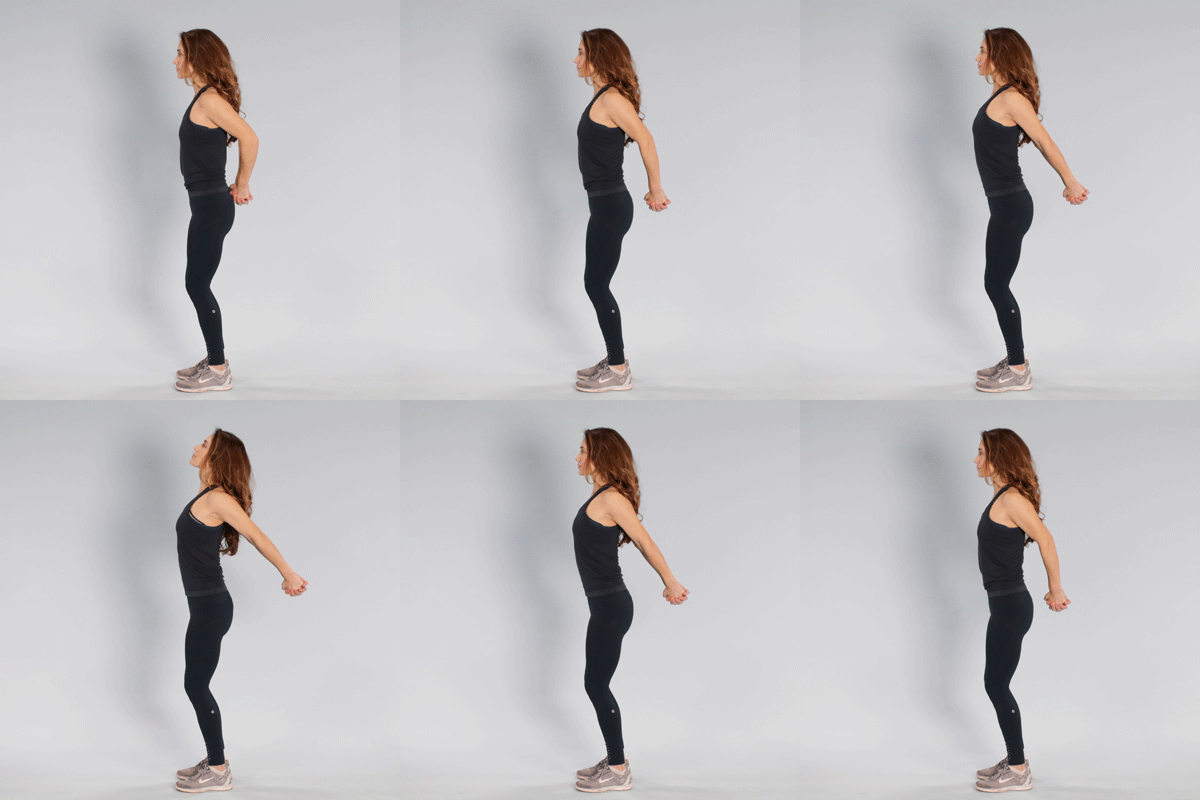
Feel a nice stretch in your chest while activating your core during a chest opener.
How to:
- Stand with your feet shoulder-width apart and your arms down at your sides.
- Inhale and clasp your fingers together behind your back.
- As you exhale, begin to lean backward in your torso, feeling your chest open to the room.
Forward fold
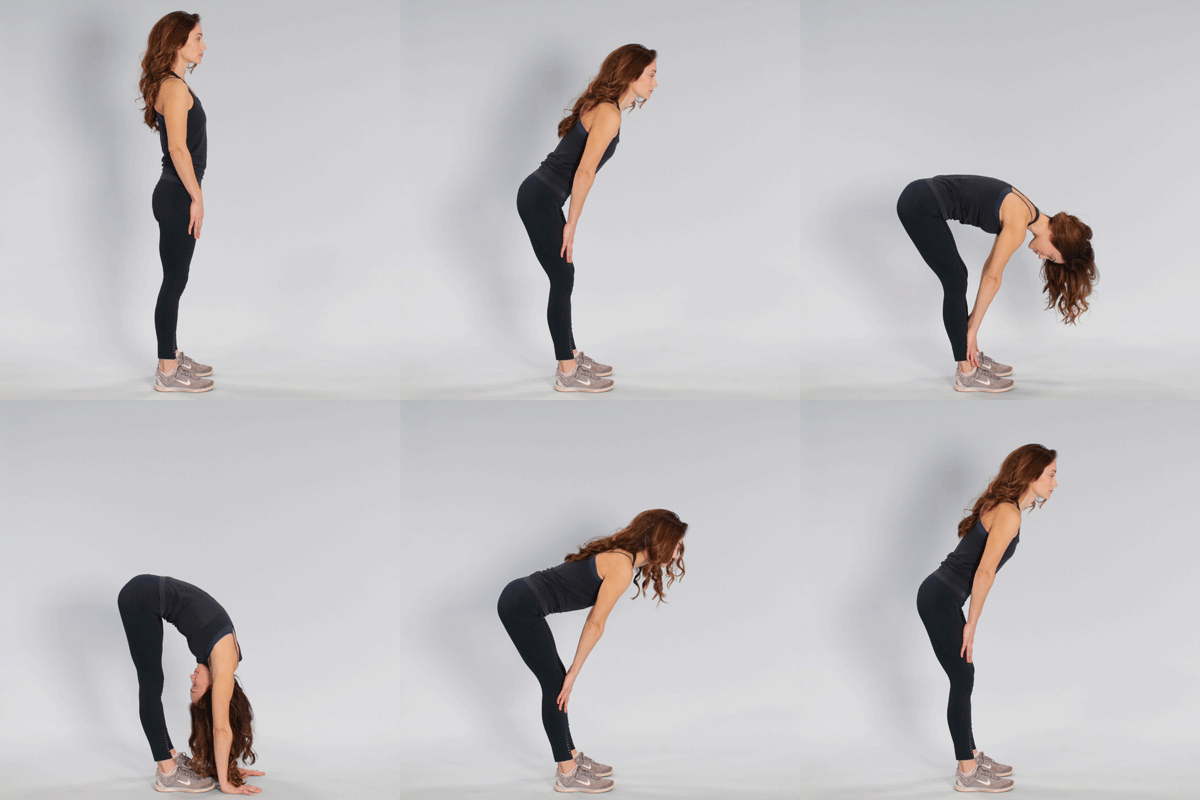
A forward fold is a full-body stretch that can help warm up the entire body.
How to:
- Stand with your feet close together.
- Inhale. While you exhale, bend forward at your hips, bringing your head to your knees and your hands on the ground.
- Aim for straight legs as you do this. If needed, bend your knees slightly to allow your hands to reach the ground.
Hip circles
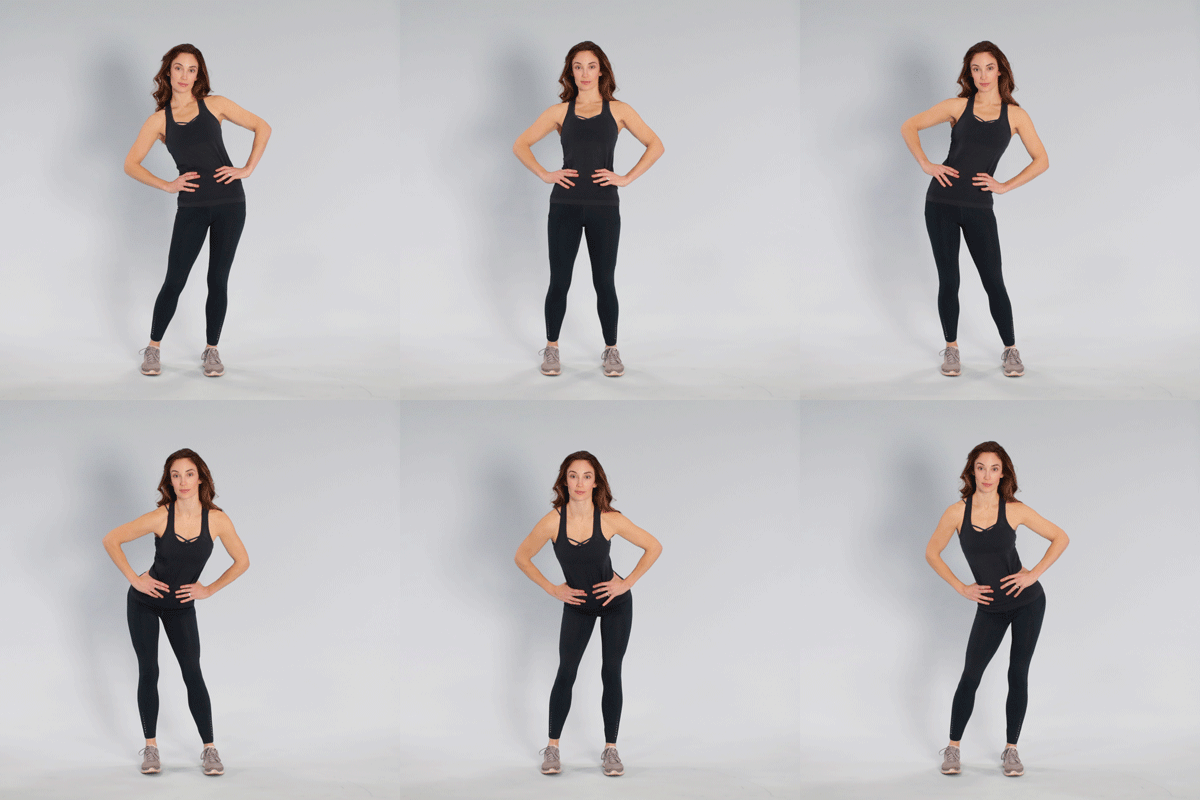
Start to engage your core and bring movement to your hips with hip circles.
How to:
- Stand with your feet shoulder-width apart and your hands on your hips.
- With your feet firmly planted, begin to draw a circle with your hips going in a clockwise motion.
- As your hips get looser, widen the circle.
- Repeat going in a counterclockwise direction.
Hip hinge
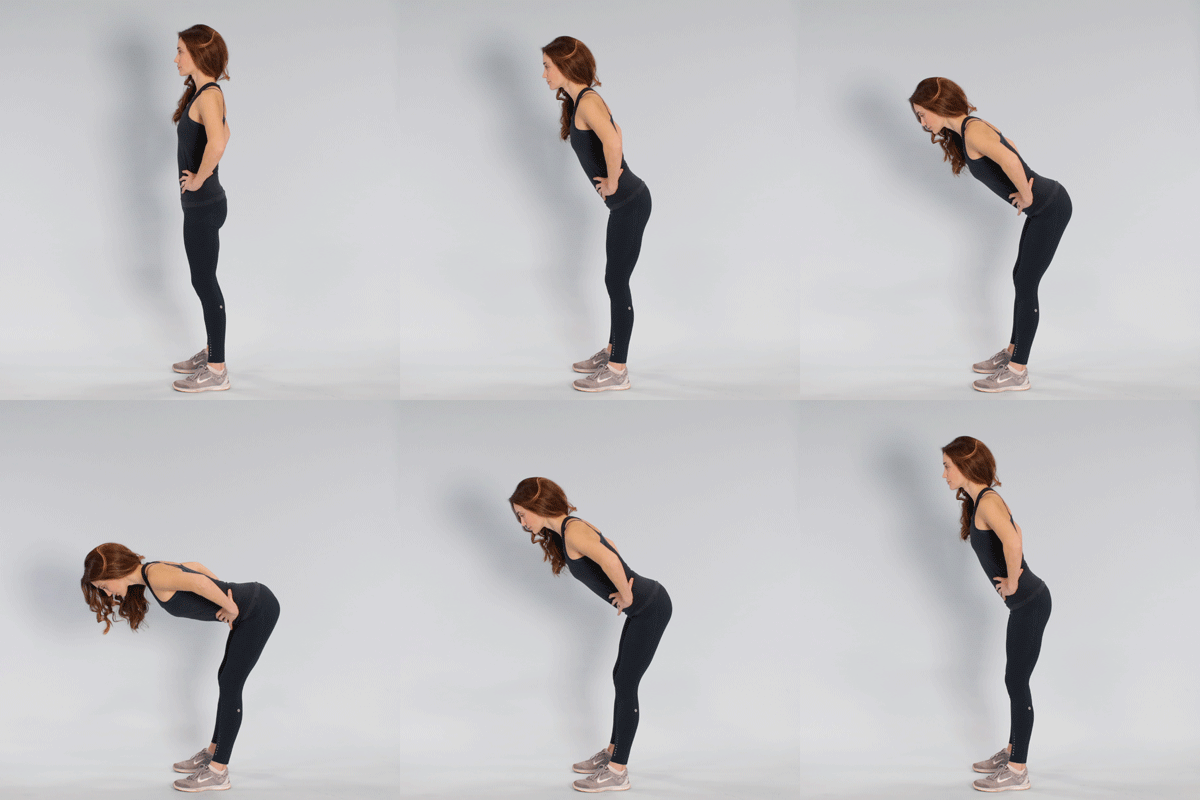
Warm up your hips with help from your core muscles.
How to:
- Stand with your feet shoulder-width apart and your hands on your hips.
- Keeping your knees soft, inhale and bend forward at the waist.
- Keep your back straight, shoulders back, and neck neutral.
- Bend forward until you feel a stretch in your hamstrings.
- Exhale and release back to standing.
Standing Cat-Cow
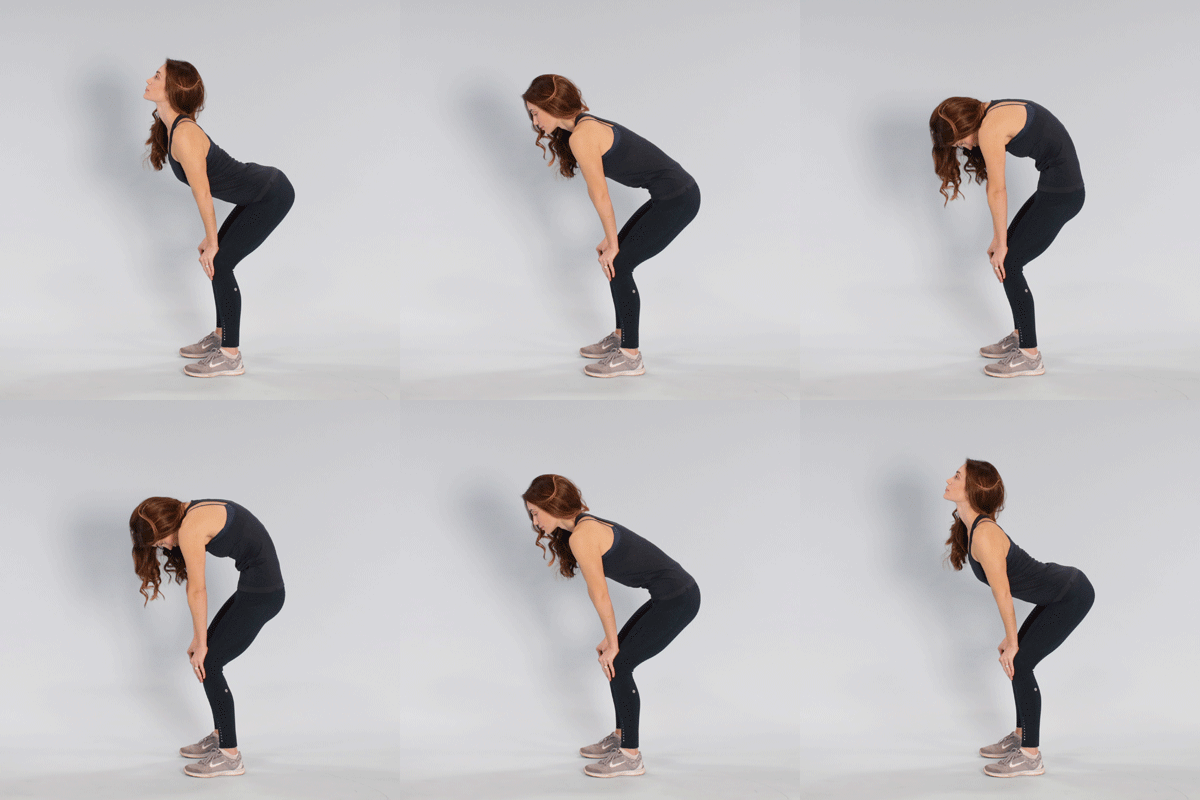
Really feel the stretch in your abs with a standing version of this classic yoga move.
How to:
- Bend at your waist and put your hands on your knees.
- Inhale and arch your back, tilting your chin up to the ceiling and allowing your back to sink toward your thighs.
- Exhale and round your spine to the ceiling, dropping your head down.
After stretching, you can strengthen your abs with some basic strength training movements.
Perform 3 sets of 12 to 15 reps for each exercise using only your body weight. As you build strength, use weighted objects like dumbbells, kettlebells, or soup cans to add additional weight.
Standing bird dog
The standing bird dog can help you focus on your core while improving balance. Control the movement, going as slowly as you can.
How to:
- Stand with your feet together and your arms down at your sides.
- Inhale and simultaneously lift your right arm and left leg up, bending your left knee and keeping your right arm straight.
- Pause when your right fingers are pointing up toward the sky and your left thigh is parallel to the ground.
- Exhale and release, repeating on the other side.
Squat
Squats are a foundational movement that targets your lower body and engages the core.
How to:
- Stand with your feet shoulder-width apart, toes slightly lifted upward.
- Keeping your chest up, begin to sit back in your hips, bending your knees and dropping your butt toward the floor.
- Allow your arms to come out in front of you, and make sure your knees push out, not fall in.
- When your thighs reach parallel to the ground, push through your entire foot back to start.
Single-leg deadlift
Unilateral, or single-arm/single-leg movements, are effective for improving balance and targeting core stabilizer muscles.
How to:
- Stand with your feet shoulder-width apart and your arms down at your sides.
- Inhale. As you exhale, begin to bend at the waist, taking your left leg straight behind you and your arms straight in front of you.
- Take care that your hips don’t open up, keeping them square to the floor. Keep a slight bend in your right knee, feeling the ground beneath you.
- Take your leg back as far as you can comfortably, with the goal of forming a straight line from your fingers to your toes, and then return to the start.
- Repeat on the other leg.
Wide side crunch
A standing wide side crunch targets the obliques while also engaging your legs.
How to:
- Take a wide stance and sink down, bending your knees until your thighs are close to parallel.
- Place your hands behind your head.
- Inhale and bend your torso to the right, feeling the crunch in your right oblique.
- Exhale and return to center, repeating on the other side.
Knee tuck extension
Standing knee tucks require balance and mobility, and target the obliques.
How to:
- Stand with your feet shoulder-width apart and your arms bent, hands behind your head.
- Bend your torso to the right while simultaneously bringing your right knee up, aiming to touch elbow to knee. Keep the movement concentrated to your side.
- Return to the start, then repeat on the other side.
Standing bicycle crunches
Take your bicycle crunches up a notch by standing, focusing on the rotation.
How to:
- Stand with your feet shoulder-width apart and your arms bent, hands behind your head.
- Bring your right knee and left elbow to touch in front of your body, twisting and crunching your torso.
- Return to the start, repeating with the left knee and right elbow.
Once you have a solid foundation of strength in your abs, it’s time to challenge yourself by incorporating new movement patterns and adding additional weight.
Start with 3 sets of 10 to 12 reps, adding weight as needed.
Standing core stabilizers
Grab a light dumbbell and challenge both your arms and abs with this move.
How to:
- Hold a dumbbell by each end and stand with your feet shoulder-width apart.
- Raise your arms out in front of you.
- Inhale and twist your arms and upper body to the left, allowing your left toe to pivot as you go. Stop when the dumbbell is directly to your side.
- Exhale and return to center.
- Repeat on the other side.
Reverse lunge with a twist
Adding a twist to your lunge creates more core engagement. You can do this move with or without weight.
How to:
- Start with your feet shoulder-width apart, with your arms either down at your sides or holding a dumbbell out in front of you.
- Step back into a reverse lunge with your right leg, allowing your torso and arms to twist over your left thigh.
- Come back to start and repeat with the left leg.
Knee tuck extension with weight
Hold a light dumbbell in each hand during your knee tucks for a progression.
How to:
- Stand with your feet shoulder-width apart and your arms bent, bracing a dumbbell on each of your shoulders.
- Bend your torso to the right while simultaneously bringing your right knee up, aiming to touch elbow to knee. Keep the movement concentrated to your side.
- Return to the start, then repeat on the other side.
Squat with front raise
This squat variation can help target your leg, core, and shoulder muscles to support full-body stabilization.
How to:
- Stand with your feet slightly wider than shoulder-width apart and hold a dumbbell by each end, arms straight down in front of you.
- Begin to squat, sitting back in your hips, while simultaneously completing a front raise.
- Stop when your thighs and arms are both parallel to the ground. Ensure your chest remains proud throughout the movement.
Overhead circles
Overhead circles are a functional movement that can help strengthen the shoulders, back, and core. Focusing on slow and controlled movements can help you fully engage your core.
How to:
- Stand with your feet shoulder-width apart and grip a dumbbell at both ends, extending your arms above your head.
- Keeping your feet planted, engage your core and start to draw a circle in the air with your dumbbell, allowing your torso to rotate.
- Go clockwise for a desired number of reps, then counterclockwise.
Plank walkout
Planks are an effective way to strengthen your core and build overall body stability.
How to:
- Start standing with your feet close together and your arms down at your sides.
- Drop into a forward fold, putting your hands on the ground.
- Walk your hands out until your body reaches a high plank position.
- Pause here, then walk them back to the forward fold position and return to start.
These exercises can help further develop specific areas of your core. To complete them, you’ll need some added equipment, such as a dumbbell, TRX straps, and a barbell.
Wood chop
A full-body exercise with an ab focus, wood chops will help you build power and balance.
How to:
- Stand with your feet shoulder-width apart and grip a dumbbell with both hands, holding it on your right side.
- Squat down slightly, rotating your torso to the right.
- Keeping your arms extended, stand up, bringing the dumbbell up and across your body by twisting your torso.
- Allow your right foot to pivot and your torso to rotate to the left as you go.
- Return to the starting position and repeat.
Oblique bends
Concentrate on your side abs with oblique bends. Don’t be afraid to go heavy with your dumbbell here.
How to:
- Stand and hold a dumbbell in your right hand down at your side.
- Engage your core and bend toward the right at your waist, allowing the dumbbell to drop toward the floor.
- Using your obliques, pull yourself back to start.
- Repeat for the desired number of reps, then switch sides.
TRX oblique rollout
The further out you drop, the harder this move will be.
How to:
- Start by standing in front of the TRX straps, adjusting them to be about waist level.
- Hold one handle with each hand, straightening your arms and allowing your body to fall forward slightly.
- Slowly begin to drop your chest, driving your arms out.
- Lower as far as you can, or until your body forms a straight line from fingers to heels.
- Return to the start and repeat.
TRX hip drop
A good alternative to a side plank, the TRX hip drop is another core-strengthening exercise.
How to:
- Adjust the TRX straps to waist length and stand with your right side to the straps.
- Grab the handles together with both hands and position them on top of your head, with your elbows bent. Put your right foot in front of your left.
- Keeping the tension in your arms, begin to drop your left hip toward the ground, using your core to do so.
- Return to the start, repeat for the desired number of reps, then switch to the other side.
Kettlebell windmill
The kettlebell windmill is a challenging exercise that can help promote balance, mobility, and flexibility.
How to:
- Hold a kettlebell with your right arm overhead. Turn your left foot slightly out.
- Keeping your right leg locked, push your right hip back, hinging at the hip and keeping your chest open. Trace the inside of your left leg with your left hand, moving toward the ground until you cannot go any deeper without compromising your position.
- Keep your gaze fixed on the weight overhead at all times, while your right arm remains locked.
- Reverse to start and repeat on the opposite side.
Barbell landmine rotations
Hit your obliques, as well as your upper body, with a landmine rotation.
How to:
- Position yourself in front of a barbell in a landmine attachment. Grab the end of the barbell with both hands overlapping.
- Keeping your arms extended, move the barbell to your right hip, twisting your torso to meet it.
- Bend your knees slightly and rotate your trunk, bringing the barbell up and over to the left hip.
- Keep your arms straight throughout the movement, and allow a pivot in your foot to make the movement fluid.
Standing core exercises can be an effective way to strengthen and define your abs. From beginners to advanced exercisers, there’s something for everyone.
Nicole Davis is a writer based in Madison, WI, a personal trainer, and a group fitness instructor whose goal is to help women live stronger, healthier, happier lives. When she’s not working out with her husband or chasing around her young daughter, she’s watching crime TV shows or making sourdough bread from scratch. Find her on Instagram for fitness tidbits, #momlife, and more.